Guillaume Piens on Art Paris 2026: Language, Reparation, and the New Logic of the Art Market
March 27, 2026
How would you define Art Paris’ distinctive identity today within the international art fair landscape?
Art Paris has developed as a fair that is both deeply rooted in its local context and open to the international scene.
And it is precisely this balance that defines its singularity today. With a majority of French galleries, it plays a structuring role for the local art scene, while placing it in dialogue with galleries and artists from other contexts.
Art Paris has established itself as a fair that remains deeply rooted in its local context while remaining broadly open to the international scene. It is this balance that makes it unique today. With a dominant presence of French galleries, the fair plays a significant structuring role for the local scene, while also engaging with galleries and artists from other contexts.
What also sets it apart is the importance given, at the selection stage, to projects conceived specifically for the fair and developed with a curatorial approach. Visitors encounter presentations that take the time to articulate works in a coherent way, to create meaningful connections between artists — often bridging modern and contemporary art — which aligns closely with a distinctly Parisian tradition that is less segmented.
In a market that has significantly slowed down and become more rationalized, this approach resonates in a particularly meaningful way. Collectors are more attentive and selective, seeking works that are part of well-established trajectories rather than driven by opportunistic logic. Art Paris supports this shift by remaining a fair where established artists and emerging scenes coexist, with a continued focus on price points that remain accessible.
In recent years, Paris has also regained a distinct appeal, with an influx of international galleries and renewed interest from foreign collectors. Art Paris is actively participating in this process, offering an alternative to more globalized and standardized fairs, with a clearer identity and a closer relationship between artists and galleries.
[luxury_newsletter_form]
The 2026 edition is based on two main themes: Babel – Art and Language in France and Reparation. How do these themes intertwine and what do they reveal about contemporary times?
Both themes stem from distinct perspectives, yet enter into direct dialogue. Babel, curated by Loïc Le Gall, focuses entirely on the French scene and explores language—how artists operate with sign systems today, addressing issues of translation and the circulation of meaning, as well as the relationship between text and image. This is a long-standing theme in art history, one that today takes on particular intensity in the context of constantly fragmenting and reconfiguring forms of communication.
Reparation, curated by Alexia Fabre, opens up an international perspective. This section addresses the fractures of the contemporary world—historical, political, and social. Artists grapple with themes of memory, care, and reconstruction, often rooted in experiences of rupture or tension.
What interested us was precisely creating a dialogue between these two dimensions. On the one hand, the question of language — what allows us to name, to transmit, to produce meaning; on the other, that of repair — which involves recomposing what has been fragmented or rendered illegible.
This dialogue captures something quite accurate about our times: a moment when narratives are unstable, when points of reference are shifting, yet where there remains a strong need to rearticulate meaning, both individually and collectively. Artists are particularly attuned to these tensions, and their practices offer readings that are at once sensitive and critical.
“Art Paris has developed as a fair that is both deeply rooted in its local context and open to the international scene, where projects are conceived with a true curatorial approach and driven by strong artistic coherence.”
In a shifting art market, what role does Art Paris aim to play today for the galleries it supports — particularly French and emerging ones?
The art market has clearly evolved in recent years, with a noticeable slowdown and the end of certain highly speculative dynamics. What we see today is a more considered environment, where collectors take more time and where proposals are examined with greater attention.
Art Paris's role is to create a framework that supports this shift. As a fair firmly rooted in its local context, it plays a vital role for French galleries, providing them with international visibility. At the same time, it provides a platform for younger entities to develop, thanks in part to sections like Promises, which facilitate gradual entry into the trade fair circuit.
Particular attention is given to maintaining a balance between established galleries and emerging structures, as well as between recognized and younger artists. This balance helps create a coherent offering, where different types of collectors can find their place — including through works at accessible price points that continue to generate genuine interest.
In this way, Art Paris enables galleries to reach multiple circles of collectors — a loyal French and European base, as well as a growing international audience — under conditions that encourage meaningful encounters, a deeper understanding of the works, and more direct exchanges with artists and galleries.
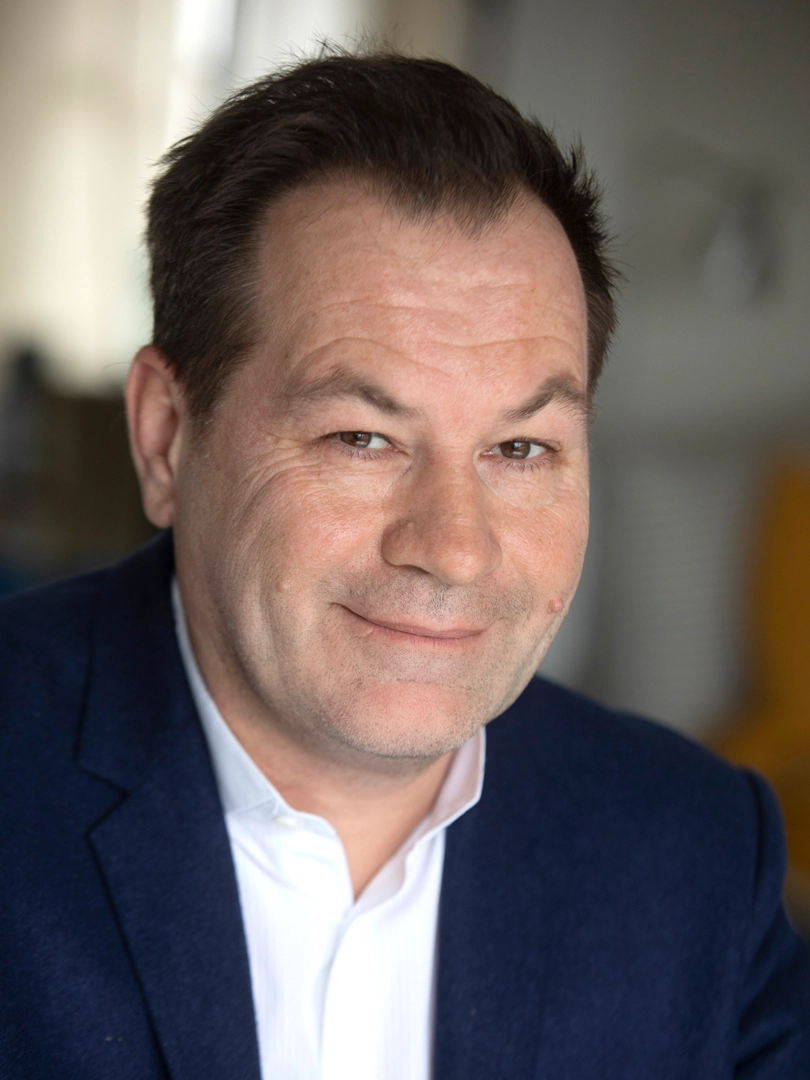
Photo: Céline Nieszawer for Art Paris