
Modern Offices 2026: Five Directions That Will Define Workspace
May 11, 2026
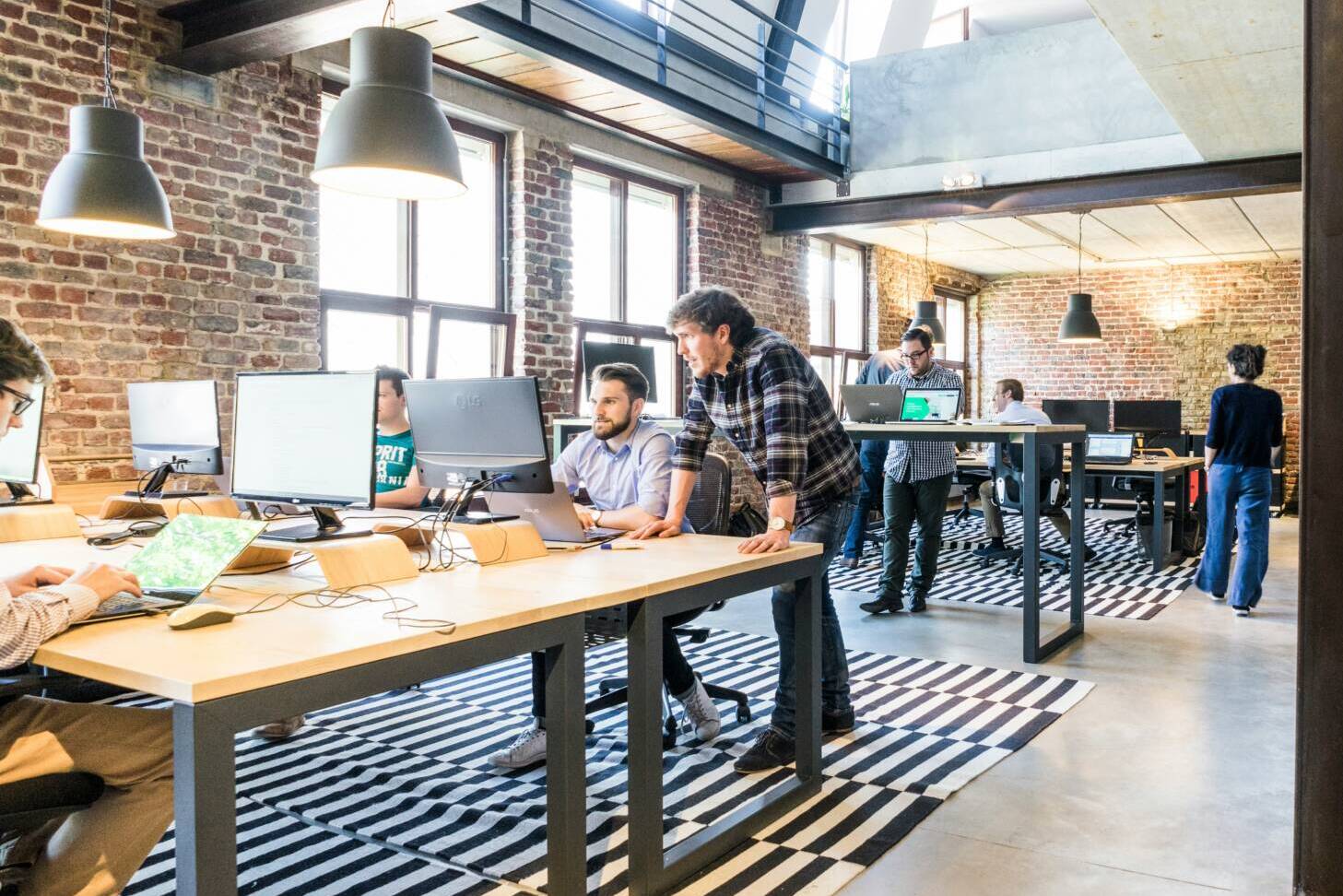
The office isn't disappearing in 2026. It's changing its function: from a place of daily presence to an environment of collaboration, knowledge exchange, and work requiring concentration. Companies are increasingly asking whether employees should return to the office, and increasingly asking what kind of office actually makes sense today.
This shift is evident in both developer strategies and tenant decisions. What matters now is not just location or the number of workstations, but also the quality of the experience, the flexibility of the space, and the office's ability to support the new working model.
The coming months will show that the office market will develop more selectively than before the pandemic. Spaces that can justify their presence will gain the most importance.

The office as an environment of collaboration, not just presence
In 2026, the office will be judged primarily by the quality of cooperation, not by attendance alone.
Why is “office fill” no longer a valid indicator?
Just a few years ago, the number of occupied workstations was the key metric for success. Today, this model is becoming insufficient. Companies are increasingly analyzing whether the space truly supports meetings, rapid decision-making, and knowledge exchange between teams.
This is a significant shift for the premium office market as well. The most desirable offices are no longer designed solely to maximize workspace. Spaces that facilitate project work, informal consultations, and short team meetings are becoming increasingly important.
What spaces are gaining importance?
The growing popularity of hybrid work means that classic open-space layouts are gradually being limited in favor of more diverse work environments.
New office designs are featuring larger collaboration rooms, quiet work zones, focus rooms, and spaces for mentoring and onboarding. This addresses a problem companies have recognized after the remote work period: some processes can be completed online, but building an organizational culture requires physical presence.
AI enters the office as part of everyday work
The office space in 2026 responds to changes in the labor market caused by the increasingly deeper integration of AI technologies, which are no longer an addition to processes but are starting to directly influence the way work is organized and space is designed.
What does AI change in the organization of the working day?
Automating some administrative and analytical tasks shifts the workload toward collaboration, data interpretation, and faster learning. This means employees increasingly need space for project work, workshops, and dynamic meetings.
The rhythm of the workday is also changing. The office is designed to support shorter, more intense interactions instead of hours spent at a fixed workstation.
In practice, this means greater space rotation and a move away from the “one desk for one person” model.
How does AI influence space design?
Office architecture is beginning to respond to new organizational needs. Modular offices that can be quickly adapted to various work scenarios are increasingly being designed.
Technologies supporting building management are also gaining ground: intelligent reservation systems, space utilization analysis, and energy optimization solutions. AI is becoming not only a work tool but also a component of office management itself.
Office portfolios will become more flexible
In 2026, companies will manage their office more like a portfolio of assets than a permanent space to maintain.
What does flexible wallet mean?
Even before the pandemic, the prevailing model was multi-year leases based on predictable employment growth. Today, many organizations are operating much more cautiously.
Companies expect the ability to quickly scale space, shorten or expand lease terms, and adapt space to the changing number of employees present in the office.
Therefore, the importance of serviced offices, flexible lease modules and mixed-use projects that combine office, service and hospitality functions is growing.
Why will companies look for space sooner?
Paradoxically, flexibility is now increasing competition for prime locations. Tenants are increasingly eager to reserve high-quality space in city centers, fearing a limited supply of modern projects.
This is particularly visible in the premium segment, where buildings offering not only environmental certificates but also well-designed common areas, catering and well-being facilities gain an advantage.
Data, technology and modernization will replace thinking only about square footage
The future of offices will depend on the quality of space management, not just its size.
What metrics will replace traditional occupancy?
Companies are increasingly analyzing not only the number of people present in the office, but also how specific areas are used.
Data on meeting efficiency, collaborative room utilization, work comfort, and user satisfaction are becoming increasingly important. This leads to more precise space design and the reduction of underutilized space.
In practice, this means moving away from thinking about an office solely in terms of square meters.
Why will modernizing existing offices be more important than building from scratch?
In many cities, it is now more profitable to adapt existing buildings than to implement completely new projects.
Modernization allows for a faster response to market needs and reduced investment costs. At the same time, tenants increasingly expect technological and environmental standards that older offices did not originally offer.
This means that the office market in 2026 will develop more through the transformation of existing spaces than through the massive expansion of new supply.
Wellness and hospitality will become the standard, not an add-on
The office in 2026 will have to offer an experience, not just a utilitarian function.
How does an office “gain the character of a place”?
The most competitive projects increasingly resemble the tranquil spaces of hotels or private business clubs. Interiors are becoming warmer, more diverse in materials, and less corporate.
Natural light, acoustics, air quality, and access to greenery are becoming increasingly important. Many offices are now incorporating lounge areas, terraces, quiet work libraries, and well-being spaces.
This change stems from a simple fact: if an employee is to come to the office voluntarily, the space must offer more than just access to a computer.
Why is wellness becoming an element of strategy?
Wellness is no longer just a benefit communicated in employer branding materials. It's increasingly becoming a part of employee retention strategies and building a quality work environment.
Companies are also recognizing the link between work comfort and productivity. Therefore, investments in ergonomics, the quality of shared spaces, and solutions that support regeneration are beginning to be considered elements of long-term organizational management.
In short:
- In 2026, the office will be judged by the quality of cooperation, not just attendance.
- AI will impact both the way we work and the design of office spaces.
- Companies will manage spaces more flexibly than before the pandemic.
- Wellness and hospitality will become a standard element of modern offices.
- Data, modernization and efficient use of space will become paramount.
End
The office of the future won't be defined by size or the number of workstations. What will be crucial is its ability to support collaboration, concentration, and the quality of employees' daily experience. This shift represents the most important change in the office market in 2026.
Related posts:
 HOW TO BUY ANTIQUES AND ASSESS THEIR VALUE
 Adrian Kołodziej of Luxury Boutique talks to Alda Filipe of Palmares Ocean Living & Golf in the Algarve.
 Why you should consider investing in the Costa Cálida and Costa Blanca.
 Milena House – an Estonian escape to nature wins a Luxury Lifestyle Award for Ako In