
Singapore: a city that breathes green as a vision of a garden city
May 14, 2026
Gardens by the Bay is one element of the strategy that has consistently realised the vision of a Garden City.
For decades, Singapore has consistently pursued the vision of a garden city, and today, despite its small size and extremely high building density, it is considered one of the greenest cities in the world. It is a story of a place where greenery is not a decorative element or a marketing slogan, but a component of government strategy, a tool for urban planning, and a foundation for quality of life.
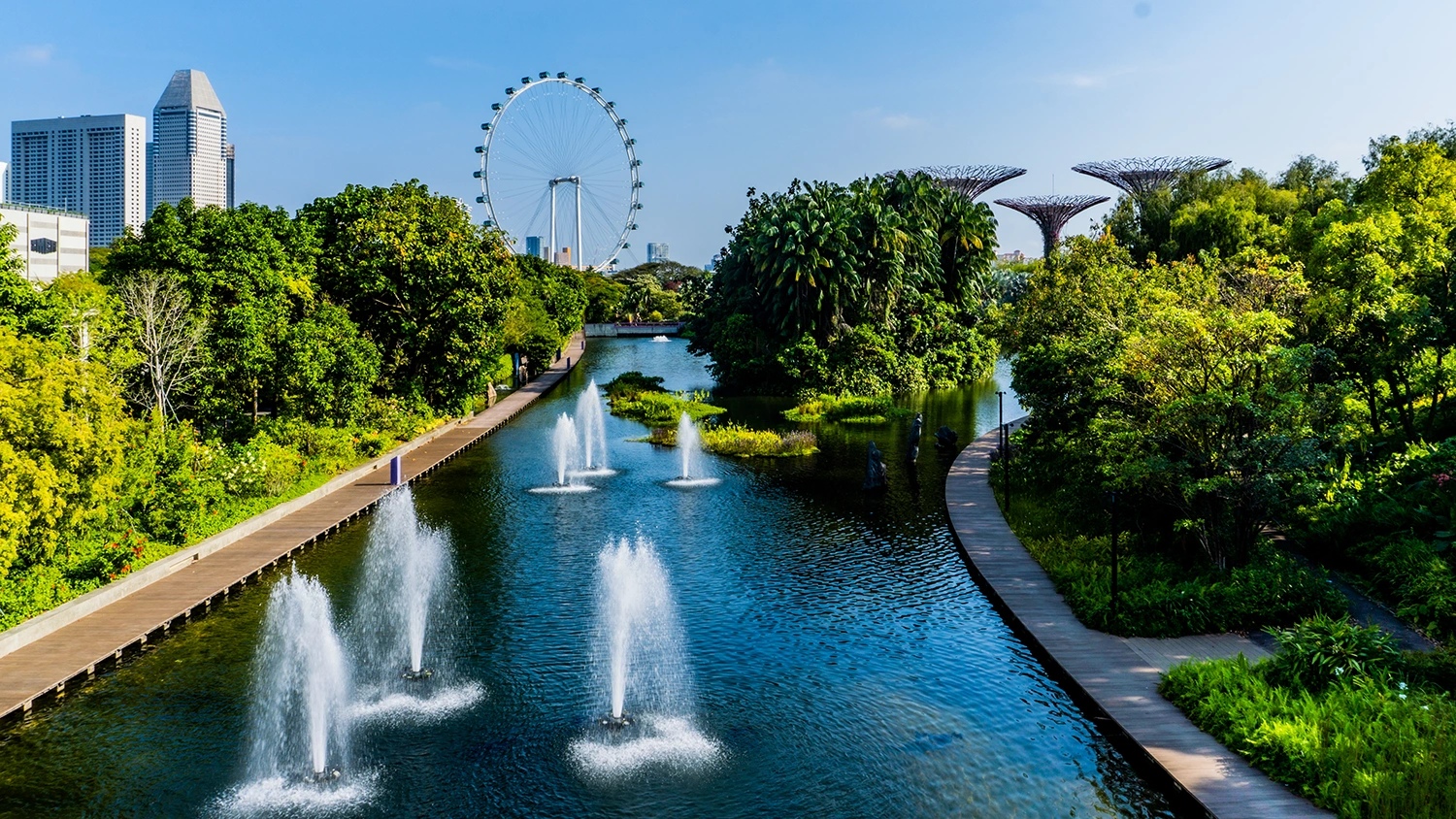
I arrived in Singapore sixteen years ago. I still have a photo of the Cloud Forest construction site from my first days there. Even then, you could already feel that something spectacular and bold was emerging, a project on a scale that transcended conventional thinking. There was a conviction in the air that this would not just be a tourist attraction but also a new symbol of the city’s ambitions. Today, when I return to the same place repeatedly and look through the same frame, I still feel a surge of energy, though I understand it completely differently now. It is no longer a fascination with futuristic form, but admiration for the agency and consistency of a long-term vision.
The journey begins at Marina Bay Sands, one of Asia’s most recognisable buildings. Leaving the gleaming shopping arcades and hotel lobby, we step onto a pedestrian bridge leading directly to Gardens by the Bay. Behind us lie three iconic towers connected by a pool/terrace suspended high above the city. A vast expanse of sky, greenery, and water opens before us. With each step, glass and concrete give way to tropical greenery, which gradually takes over the landscape. This physical connection between Marina Bay Sands and Gardens by the Bay is more than just a convenient connection. It is a consciously designed spatial sequence in which the transition from the world of consumption to the world of nature is seamless and almost symbolic. Few cities in the world create such a clear urban narrative.
Supertrees as bio-machines
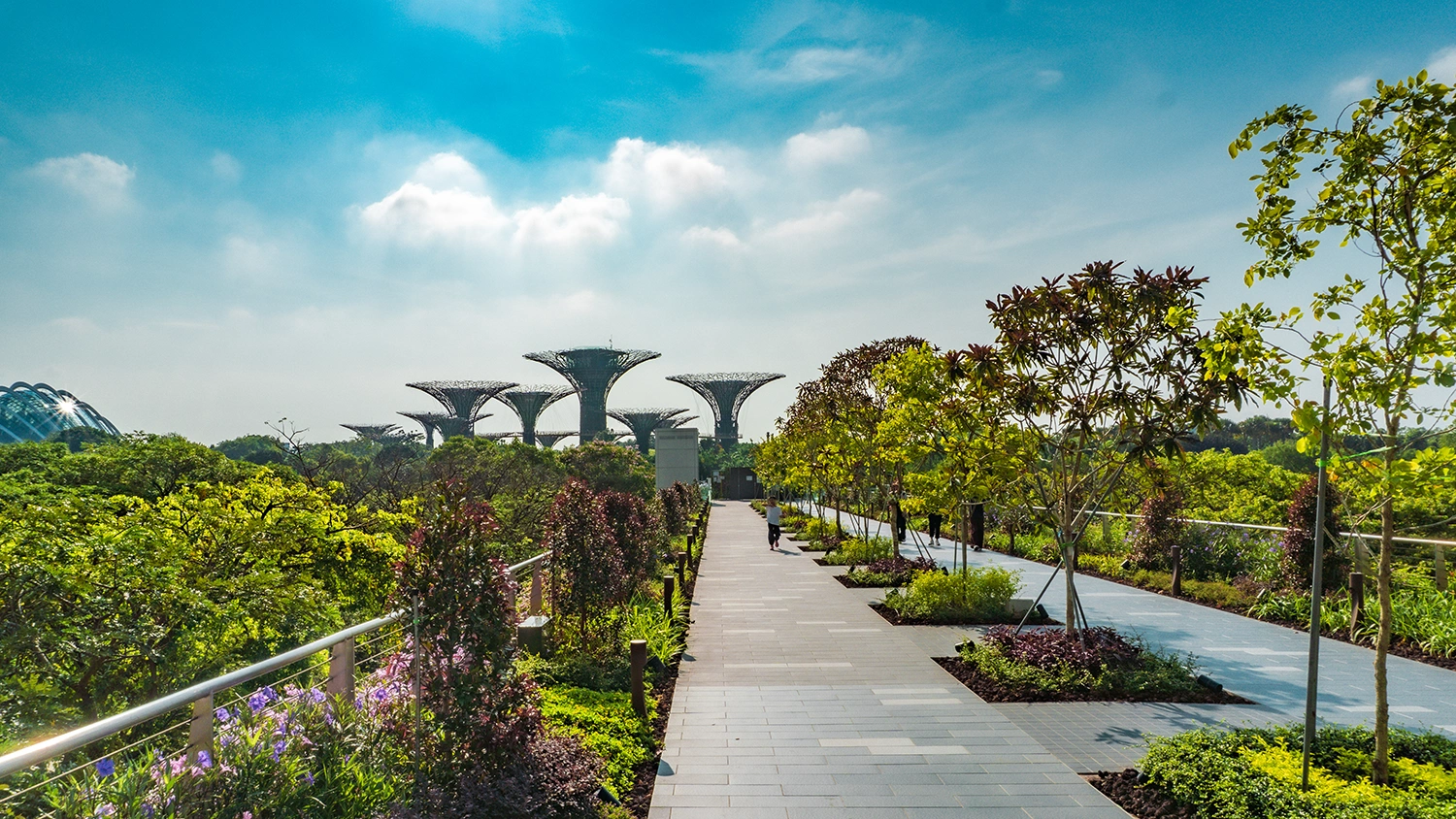
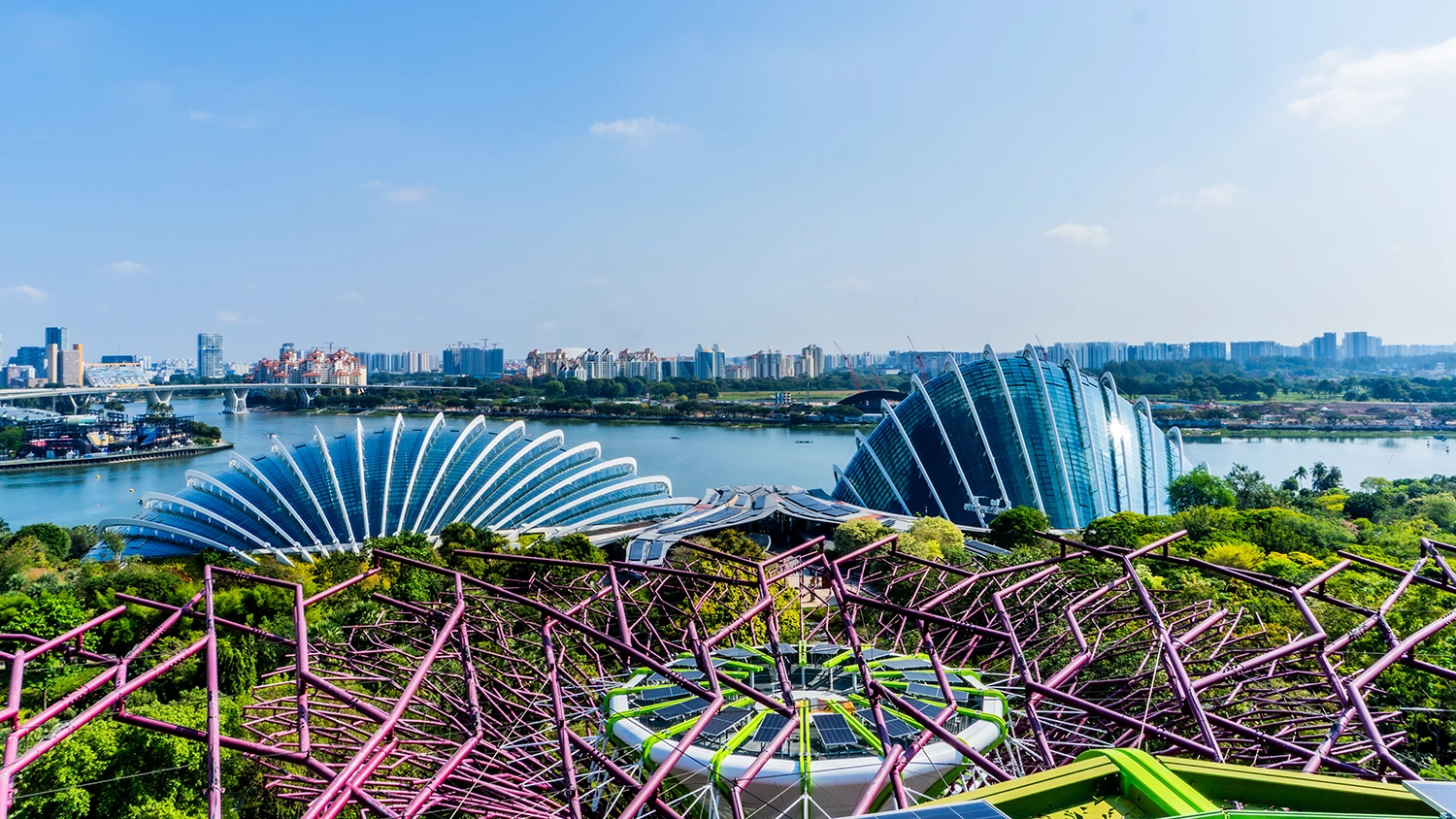
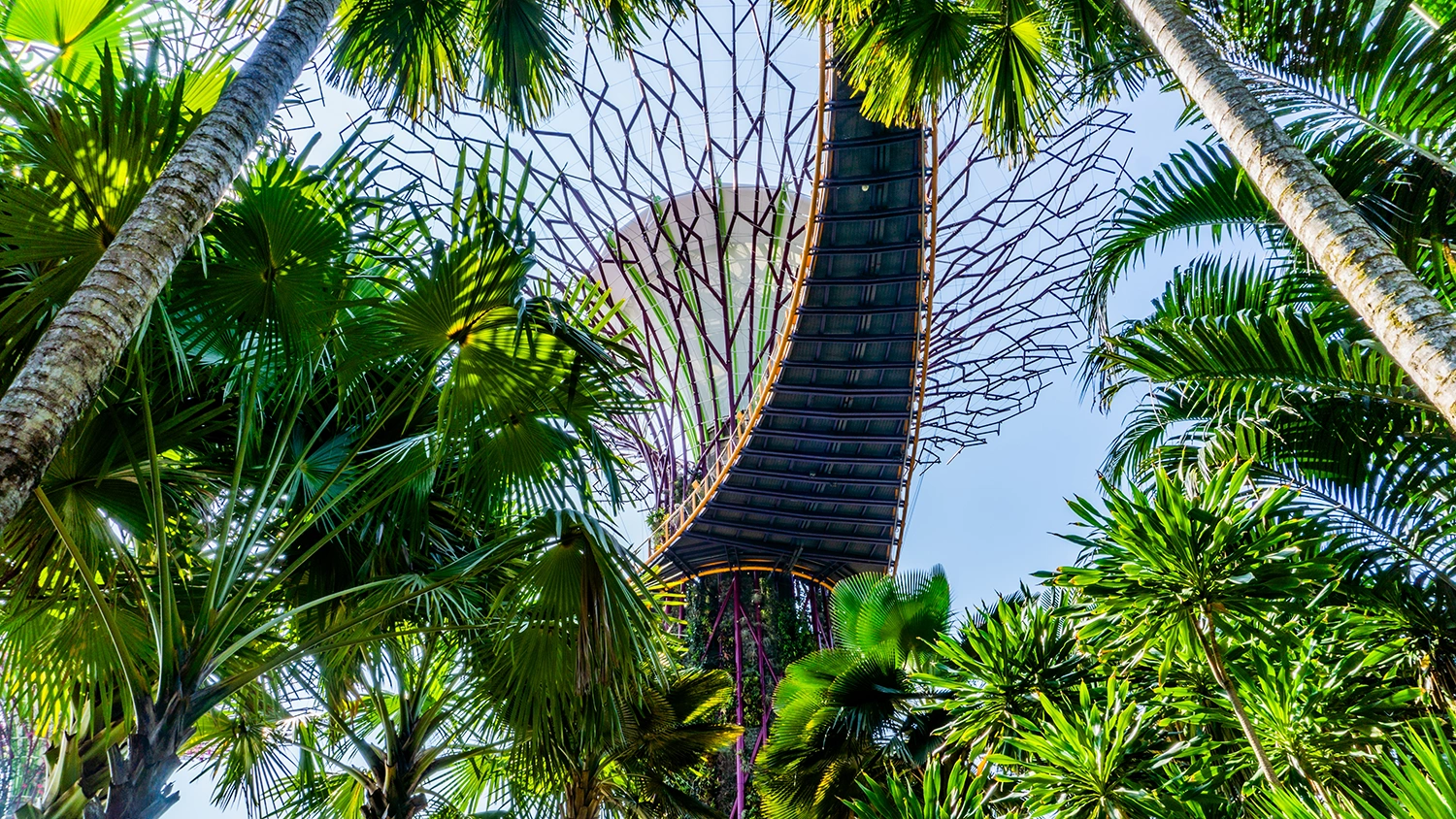
Upon entering the Supertree Grove, one loses all sense of scale. The structures, ranging from twenty-five to fifty metres tall, evoke a futuristic forest that has sprung up between the bay and the business centre. Up close, their steel cores almost disappear beneath a blanket of lush vegetation. Vines, ferns, and orchids entwine the structures, creating a sense of architecture reclaimed by nature. The Supertrees are iconic, yet they also function as precisely engineered bio-machines. Integrated photovoltaic panels generate energy, systems harvest rainwater for irrigation, and parts of the structures act as ventilation shafts for the conservatory, ventilating warm air as part of a closed-loop cooling system. Form, technology, and ecology intertwine here, demonstrating that aesthetics can stem from environmental function. A stroll along the OCBC Skyway, suspended between the structures, opens up panoramic views of the bay and the city centre. From this height, the relationship between greenery and dense development becomes exceptionally clear. On one side, the distinctive silhouette of Marina Bay Sands, on the other, a rolling landscape of vegetation. In the evening, during the Garden Rhapsody show, the Supertrees illuminate, creating a spectacle that attracts residents and tourists alike. However, this is not a closed event for a select few. Families sit on the grass, employees of the nearby financial centre stop after work, and joggers slow down. The luxury of being close to nature becomes a shared and accessible experience here.
Climate engineering at the Flower Dome
The next stage is two monumental, glass-enclosed domes. The first, the Flower Dome, is the largest greenhouse in the world and an impressive example of climate architecture. Stepping inside, we are transported to Mediterranean and semi-arid landscapes. Olive trees with centuries-old, twisted trunks, monumental baobabs, and seasonal flower displays create a time-changing setting that reinterprets botanical narratives from around the world. However, advanced engineering underpins the visual impact. The greenhouse’s structure was designed to minimise interior heat gain while maximising daylight. Sensor systems constantly monitor temperature and humidity, optimising energy consumption. In a tropical city where air conditioning dominates commercial spaces, the Flower Dome demonstrates that climate control can be integrated thoughtfully and effectively into architecture.
Cloud Forest — a waterfall inside a glass dome
Nearby is the Cloud Forest, a more spectacular and immersive space. A 35-metre waterfall cascades down a lush mountain covered with species from tropical highlands. Mist constantly cools the air, and the sound of water creates a natural rhythm that contrasts with the dynamics of the city behind the glass facade. Exhibits explore the fragility of mountain ecosystems threatened by climate change, combining a spectacular spatial experience with education. Footbridges wind around the inner mountain, guiding visitors through successive layers of vegetation, while the structure remains virtually invisible. The architecture becomes integrated with nature. It is worth remembering that the entire complex was built on reclaimed land that, just a few decades ago, contained water. Today’s landscape is the result of conscious intervention and long-term planning. It proves that urban expansion can go hand in hand with the creation of new ecosystems.
Green Planning Strategy
Gardens by the Bay is part of a broader Singapore strategy that has been developing the Garden City concept since the 1960s and is now evolving into a City in Nature. Greenery in this city is not an adjunct to development, but an integral element. Mandatory planting for new developments, green roofs, linear parks, ecological corridors, and nature reserves create a cohesive system that connects the city centre with the island’s outskirts. In such a densely built-up country, every square metre is precious, so the decision to dedicate a large portion to parkland was a strategic one. Gardens by the Bay acts as the green heart of Marina Bay, lowering ambient temperatures, supporting biodiversity, and offering space for regeneration in the immediate vicinity of the financial district.
A city that breathes
Gardens by the Bay is not just a tourist attraction. It is a city-wide infrastructure for well-being. Greenery actively influences the micro-climate, improves air quality, and creates a social space where Singapore’s skyline encompasses not only towers and highways but also trees and open lawns. The city is constantly growing and densifying, but simultaneously investing in open space and the experience of nature. Therein lies its strength. Gardens by the Bay sends a clear message that a luxurious 21st-century city is not built of marble and gold, but of intelligent planning, green infrastructure, and spaces that allow residents to breathe and regenerate.