
Summer Mocktails: Non-Alcoholic Bar on the Yacht and in the Garden
July 14, 2026
The best summer parties rarely start with a menu. First comes the lighting, the temperature, the table setting, and the host's decision not to rush anything. On a yacht, this means a few well-chilled bottles, ice prepared in advance, and a bar that doesn't interrupt conversation. In the garden, a table set near the greenery, citrus fruits in a bowl, herbs in water, and glasses ready before the guests arrive.
A 0.0% mocktail isn't exactly a polite option for those who are giving up alcohol these days. It's increasingly being chosen by guests who know how they want to spend their evening and the next morning: without a dip in energy, with better sleep, and with a workout, cruise, or travel plan for the next day. What's important about a private premium service is that such a choice doesn't require commentary.
A good 0.0% alcohol drink is all about the same elements that determine the quality of a classic cocktail: proportion, temperature, aroma, and the right timing. Without alcohol, mistakes are more easily spotted: an overly sweet base, weak ice, a haphazard garnish, or a poorly chosen glass. A well-made mocktail should have structure, not just flavor.
A leisurely bar
A summer bar shouldn't be overcrowded. Too many bottles, decorations, and variations detract from its lightness. Three well-conceived drinks are enough: a bitter aperitif, a tall citrus drink, and a cool herbal or mineral composition. Such a menu is understandable for guests and convenient for the host, but above all, it helps maintain a cohesive atmosphere.
Chill, proportion, and timing are key. Ice should be treated as an ingredient, not a technical adjunct. A large cube in a short glass slows dilution. Finer ice in a highball creates a different texture. A chilled glass changes the first impression even before the taste appears. These are details, but they are what make the difference between a prepared bar and a drinks table.
On a yacht, a pre-prepared service works best. The bases can be poured into resealable bottles: lime-mint cordial, white tea syrup, green pepper infusion, grapefruit juice, and non-alcoholic bitters. At the moment of serving, all that's left is ice, a measuring cup, sparkling water, and a glass. The less activity at the bar, the less risk of chaos on board.
In the garden, you can allow yourself more. Not for show, but rather for scent and rhythm. A grapefruit peel drawn over the glass, a shiso leaf, rosemary used only for aroma, lemon verbena, Thai basil, a short smoke in a drink served after dark. The aroma should open the drink, not overwhelm its flavor.
Equipment that matters
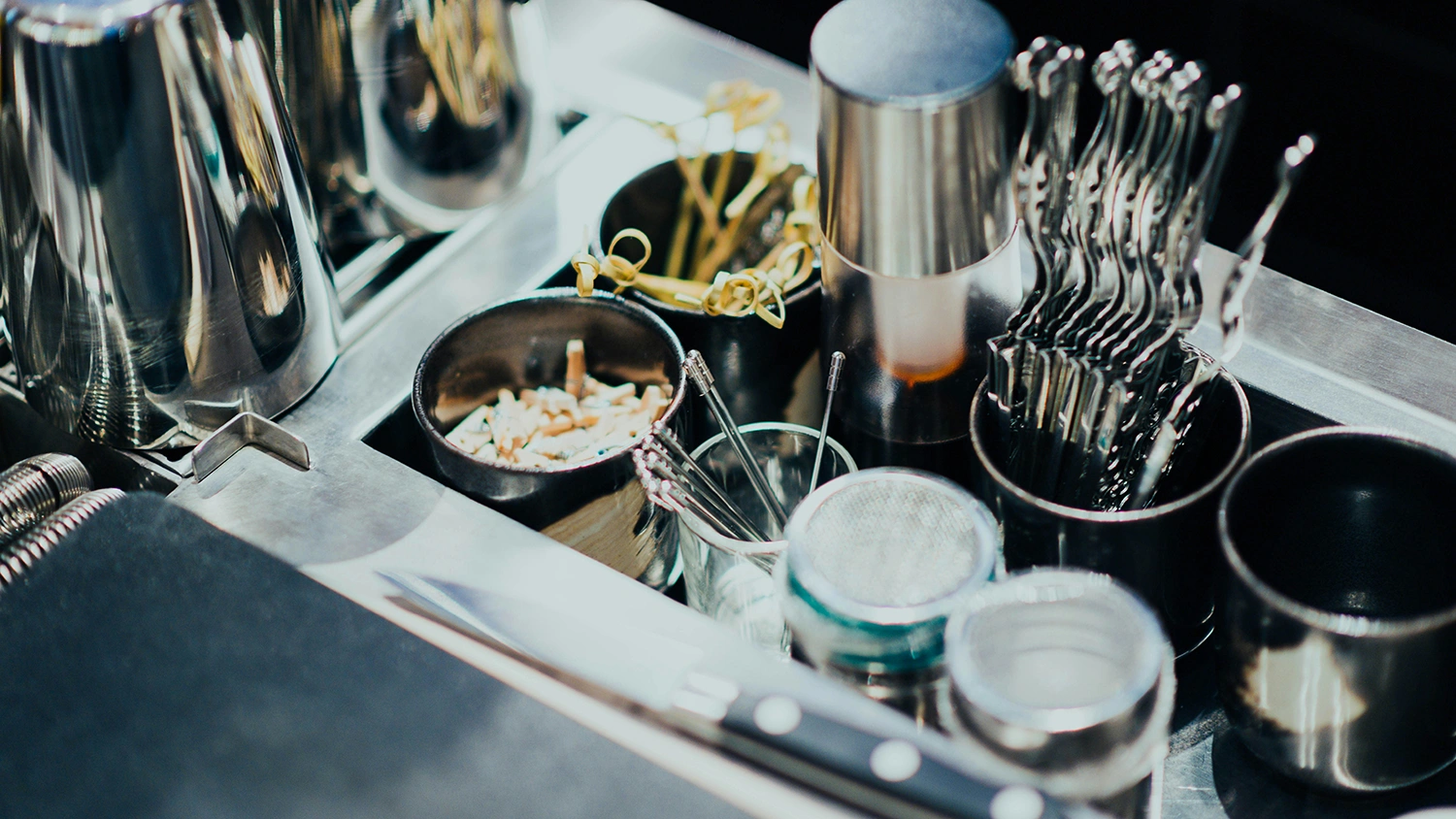
A 0.0% bar doesn't require many tools, but the basics should be good. A sturdy shaker is essential for drinks with juice, citrus, and syrup. A mixing glass is useful for aperitif compositions, especially those inspired by a Negroni or Martini. A jigger regulates proportions. A Hawthorne strainer and a fine strainer allow for a clear liquid without ice particles or pulp.
These aren't accessories for effect. They change the temperature, dilution, and texture of the drink. The difference between a measured and chilled drink and one made "by eye" in a glass is immediately noticeable, especially when there's no alcohol to mask the inaccuracy.
In the premium segment, it's better to buy a few items separately than a set that promises everything at once. A Japanese shaker, a heavy mixing glass, a good bar spoon, a precision jigger, a sturdy citrus press, an insulated ice container, tongs, and a sprayer will be enough to build a bar that looks natural both on the deck and in the garden.
A smoker's kit should be treated with caution. It can be useful in the garden, especially for an evening aperitif. On a yacht, it's often unnecessary. For 0.0% ABV drinks, it's better to start with a clean citrus note, a distinct bitterness, and a well-chilled glass than with an effect that easily becomes too literal.
Lessons from beach bars
Iconic beach bars teach one thing: a place is remembered by its rhythm, not the length of the menu. Nikki Beach evokes the bright, daytime style of a beach club. Baba Nest in Phuket evokes sunsets and the lull before evening. Soggy Dollar Bar on Jost Van Dyke demonstrates how a single drink can become part of the memory of a place.
In a private summer bar, it's worth thinking similarly. It's not about replicating the tropics or arranging exotic props on the table. It's about designing a few drinks that suit the time of day, temperature, and mood of your guests. One before dinner, one for a longer conversation, one for late evening.
Three drinks 0.0%
White NOgroni with rosemary smoke
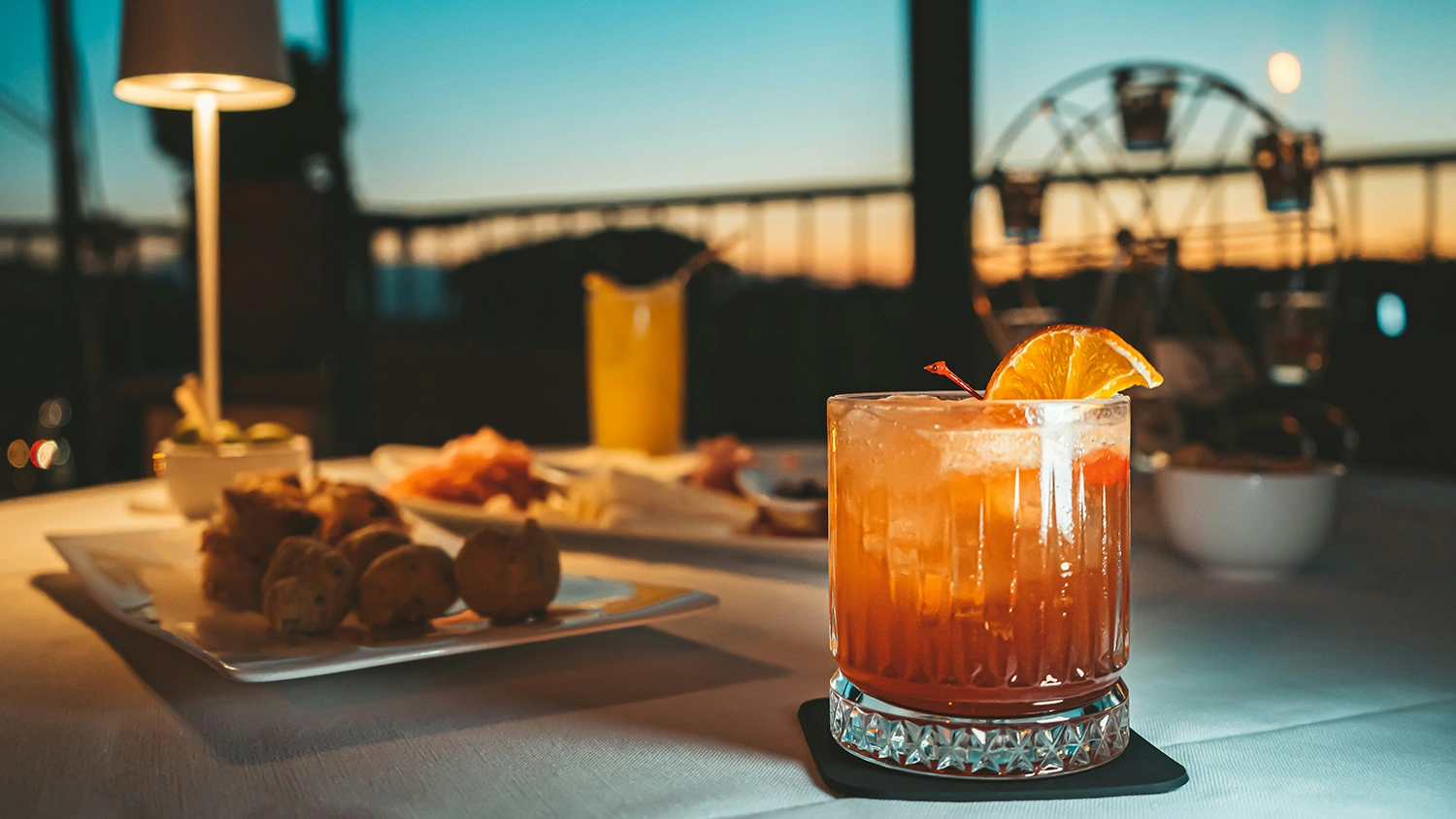
This is an aperitif to start the evening with: bright, bitter, and cool. Pour 40 ml of non-alcoholic botanical distillate, 30 ml of 0.0% white aperitif, 20 ml of verjuice, 10 ml of white tea syrup, and two drops of brine into a mixing glass. Stir with ice, pour into a large cube, and finish with a grapefruit peel. In the garden, you can add a brief hint of rosemary smoke. On a yacht, it's better to stick with citrus.
Garden Paloma 0.0
A late afternoon drink, when the sun is still high but the party is starting to slow down. Pour 60ml fresh grapefruit juice, 20ml lime juice, 15ml agave syrup, and 20ml green peppercorn and coriander infusion into a shaker. Shake with ice, strain into a highball glass, and top with cold sparkling water. Serve with grapefruit and a shiso leaf or Thai basil.
Marine Mojito
Best served at the end of dinner or for a quiet moment after sunset. It's best to prepare the base in advance: combine lime juice, mint syrup, coconut water, a few drops of brine, and a very delicate kombu infusion, then strain. Pour 70 ml of the base into a glass, add ice, and top up with sparkling water. The mint should emerge as an aroma, not as a green mass in the glass.
A bar that doesn't dominate the meeting
A 0.0% mocktail fits well into a summer menu because it doesn't require a separate justification. Guests don't have to explain why they're choosing a non-alcoholic beverage, and the host doesn't have to offer an alternative. In a short, well-structured menu, a 0.0% drink is a standard option: cool, seasonal, proportionate, and appropriate for the time of day.
A bar on a yacht or in a garden shouldn't be a catalog of cocktail ambitions. It should structure the gathering: an aperitif before dinner, a citrusy long drink for a longer conversation, a cool herbal or mineral blend for later in the evening. A few tools, good ice, fresh citrus, and carefully selected glassware will suffice if the entire arrangement is planned with the location, weather, and guests in mind.