
Rediscovering Art: The Polish Art Market 2026
May 18, 2026
For decades, Poland was considered an emerging market, full of potential but still in its infancy. Today, Warsaw auction houses are playing in a different league and increasingly calling the shots.
It was a Thursday evening in mid-June last year, the hall at Piękna 1A in Warsaw was packed to capacity, and the air was filled with that special kind of tension familiar to anyone who has ever stood behind the doors of a real auction. The fifth item of the evening was a canvas that had been considered lost for almost a century. Jacek Malczewski painted "Reality" in 1908. For decades, it existed solely as a black-and-white photograph by Krakow photographer Amalia Krieger—a shadow, an echo, a legend. When the painting unexpectedly appeared on a foreign auction site in 2021, the community held its breath. When, three years later, after a heated legal battle and a two-year freeze by the prosecutor's office, it finally returned to auction—and sold for 22.2 million złoty including the auction fee (the hammer price was 18.5 million złoty)—it became clear that the Polish art collecting scene had entered a completely new chapter.
This number isn't just a record. It's a message—sent to Paris, London, and New York—that Warsaw is serious, that Polish collectors have both the capital and the courage to invest in museum-quality works. According to analyses and market insights from Artprice, a globally recognized art market database, over the past decade, the Polish capital has joined the fastest-growing centers of contemporary art on the continent.
The numbers say a lot
However, before Malczewski's Reality landed in new hands, the Polish market underwent a test of patience. The years 2022–2023 brought global turbulence—inflation, war beyond the eastern border, rising interest rates—which left their mark on many luxury segments. Art, being art itself, proved resilient in a way that surprised even cautious analysts. 2024 closed with PLN 656.9 million in total sales of works of art and antiques—an increase of nearly 16% year-on-year, according to data from the Central Statistical Office. The auction segment alone generated PLN 403.8 million in this period, and online auctions—according to analyses based on data from the Central Statistical Office—grew by over 116% during this period. This isn't evolution, it's a revolution in distribution channels.
The year 2025 confirmed this trend, albeit at a somewhat more sedate pace. According to Artinfo, total auction sales reached 427 million złoty, a slight decline from the previous year but keeping the market above the magical 400 million mark for the third consecutive year. Auction houses responded to the slight cooling in demand by increasing their intensity—more catalogs, more auctions, more points of contact with collectors. The result? The number of transactions increased, even though the total sales value did not break records. The market is maturing, not just swelling.
Balance of power
The undisputed leader remains DESA Unicum – according to the auction house's own statements, the sixth-largest auction institution in the European Union – which controls over half of the domestic market. In 2025 alone, the auction house on Piękna Street sold 7,078 lots for nearly 218 million złoty. A three percent year-on-year increase may sound modest, but context speaks volumes: this result was achieved in an environment where the rest of the market was struggling to maintain its position. Right behind DESA is Polswiss Art, with a turnover exceeding 80 million złoty, followed by Sopocki Dom Aukcyjny and Agra Art. Smaller houses, Pragaleria, Rempex, and Krakowski Dom Aukcyjny, recorded double-digit growth, suggesting that the market is consolidating not through elimination but through specialization.
The biggest surprise of 2025, however, was not who was selling, but what was being bought and for how much. DESA Unicum's antique art segment saw a 46% increase in turnover, reaching nearly PLN 101 million. In uncertain times, investors are returning to proven assets – masterpieces fill the same psychological niche as gold. They are tangible, beautiful, historically rooted, and – in the case of Polish classics – demonstrate long-term resilience to fluctuations.
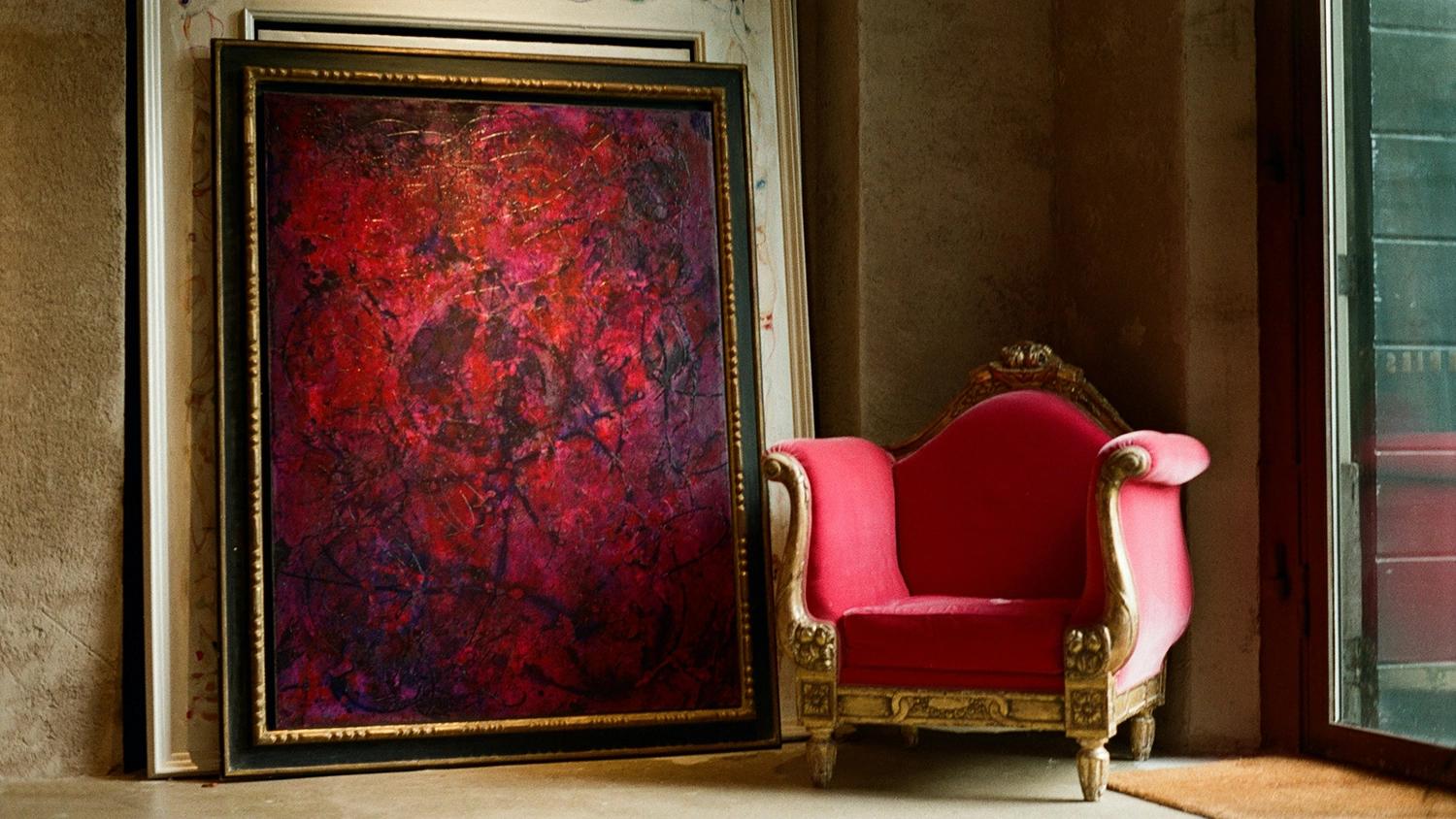
Women's Art
“The growing importance of the work of female artists shows that the Polish market increasingly functions as a space for conscious revision and supplementation of the canon.”.
– Agata Szkup, President of the Management Board of DESA Unicum
However, perhaps the most interesting development of the past year was what happened to the work of female artists. For a long time, the art market, not only in Poland, treated women as marginalized. 2025 proved to be a time of correction. Maria Jarema, one of the most important figures of the post-war avant-garde, achieved PLN 1.2 million for her Composition and nearly PLN 1.6 million for Forms at DESA Unicum auctions. Teresa Pągowska's Carnival of Venice fetched PLN 720,000, nearly half its estimate. Halina Wrzeszczańska surprised everyone: her Beams of Light sold for PLN 180,000, against an estimate of PLN 50,000-70,000. The market voted with its wallet, clearly and without beating around the bush.
It's no accident that DESA Unicum launched a dedicated Women's Art platform in 2025, organizing two auctions dedicated exclusively to women artists, with exhibitions featuring works by fifty creators. "We want our narrative about women artists to be more than just a passing fad, but to have a real impact on the market," said Agata Szkup, president of the auction house. Collection auctions—another innovation adopted from mature Western markets—generated a total turnover of PLN 28.5 million at DESA Unicum. This is a format that Christie's and Sotheby's have successfully employed for decades. Poland is now adopting it.
New players
The change isn't limited to the names on the bidding cards. The very face of buyers is also changing. People who a decade ago wouldn't have had a clue how estimation works or what a buyer's premium means are increasingly entering auction halls. DESA Unicum's Young Art Auctions—a segment starting at around 1,000 złoty—have seen a 15% increase in turnover over the past year, exceeding 8 million złoty. This figure speaks for itself: a new generation of collectors is entering the Polish art market, building their collections with inexpensive works and gradually working their way up.
In these uncertain times, art in Poland has ceased to be solely a matter of taste, but has become a matter of strategy. The fifteenth anniversary edition of KPMG's report, "The Luxury Goods Market in Poland," published in December 2024, clearly demonstrated how important the art market has become in the structure of luxury goods in Poland. For some affluent buyers, a painting or sculpture now also functions as a form of capital investment, comparable to gold. In times when stocks are trembling due to geopolitical shocks and bonds are bringing disappointments, Malczewski and Jarema are proving to be surprisingly resilient assets. It's not just about aesthetics, but also about storing value in a physical, verifiable form.
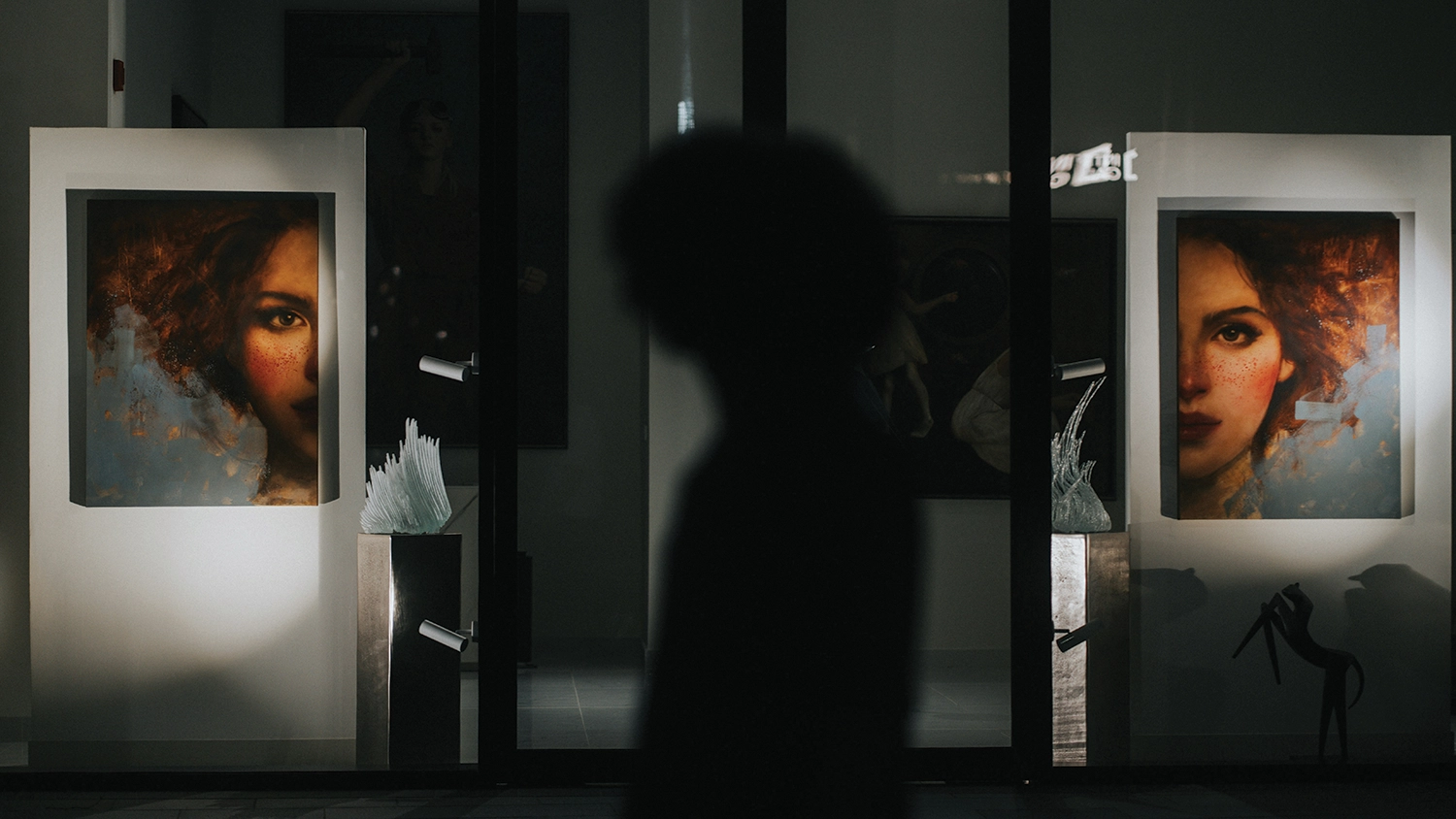
Another dimension
At the same time, online trading is growing rapidly. Online auctions, which were considered something between a novelty and a pandemic necessity just a few years ago, have become a permanent fixture. In 2024, they generated nearly 58 million złoty – more than double the previous year, according to analyses based on data from the Central Statistical Office (GUS). Technology has lowered the barrier to entry and expanded the market geographically: a collector from Gdańsk or Wrocław no longer has to travel to Warsaw to sit down at a table with a plaque.
The digitization of the gallery experience and virtual exhibitions are no longer experiments, but permanent fixtures. More far-reaching ambitions—tokenization (fractional ownership), NFTs serving as digital confirmation of the authenticity of virtual works of art—have already experienced their first round of enthusiasm and sobering in Poland. In December 2021, DESA Unicum sold the first NFT artwork in Poland and Central Europe: Paweł Kowalewski's work "Why is there rather something than nothing?" for PLN 552,000. It was announced that this would be the beginning of a regular auction segment. However, the reality proved more complicated: the global NFT boom quickly slowed down, and subsequent equally spectacular, widely publicized sales in this format were few.
Market narrative
The Polish art market today has something it has long lacked: continuity. This isn't a single season of euphoria after which everything collapses. Three consecutive years above 400 million złoty in auction turnover alone – according to Artinfo data – are proof that we're dealing with a real ecosystem, not a cyclical bubble. It's not yet Paris or London. Experts themselves honestly admit that there's still a long way to go to systemic maturity, higher liquidity, and regular transactions at the seven-figure level. But this is a country where a painting considered lost for a century resurfaces, evokes emotions comparable to those of a thriller, and sells for a sum that compels foreign observers to seriously consider Poland as a player on the European art collecting scene.
And this is perhaps the most important shift in recent years. Not just in numbers, although they are impressive, but in the way we think of ourselves. No longer as an emerging market catching up to the West, but as a market beginning to build its own narrative – with Malczewski, Jarema, and a new generation of buyers for whom a painting on the wall isn't decoration but the result of a well-considered decision.
Related posts:
 Luxury Boutique is a media partner of the Paris art week Art Paris 2026
 Guillaume Piens on Art Paris 2026: language, reparation and the new logic of the art market
 Art Paris 2026: announcement of the BNP Paribas and Her Art Prize
 Femininity is energy – Gosia Buchowicz in conversation with Malwina Kowszewicz